Archive

Archive for June, 2009

Get Excited and Make Stuff

June 29th, 2009 1 comment

Last weekend I braved a visit to the UK for Social Innovation Camp Scotland. My remit had been to be a roving expert, flitting from team to team, but I was so impressed by the first team I started working with that I ended up staying with them the whole weekend — right through to the point where we won!

Yesterday the News of the WorldSunday Times ran a rather hilarious scare-mongering piece about it. They quote Calum Steele, general secretary of the Scottish Police Federation, as saying: “the police service already have ways for the public to express dissatisfaction”.

The point that this so magnificently misses, however, is that those ways aren’t good enough. Local councils already have ways for the public to report potholes, graffiti, broken streetlights etc. — yet FixMyStreet flourishes. All public authorities already have ways for the public to make Freedom of Information requests — yet in just over a year WhatDoTheyKnow has already grown to handle about 10% of all such requests. The National Health Service already have ways for the public to provide feedback — yet over 7,000 people have preferred to use Patient Opinion (who have also managed to pull off the neat trick of getting the NHS to pay them to deliver complaints to them.)

There are many reasons why someone would prefer to use these sorts of sites rather than going directly. For some it’s purely practical: in many cases it’s much easier to visit a single easy-to-use site with a consistent interface rather than navigate the more, erm, interesting, waters of official sites, some of which still sport “Beware of the Leopard” signs.

For others it’s the communal nature of these sites, where others who have experienced the same problems can chip in with support and advice, or even just learn that they’re not alone.

But for me it’s all about how transparency reverses the balance of power. For too long too many government agencies have forgotten that they are meant to be our servants, not our masters. Before they will engage with us, they make us jump through hoops that do nothing but frustrate us, in the guise of making their lives somehow easier (though usually anyone with any inkling of business processes can’t help but wonder how it possibly ever could). And more often than not, complaints get the stonewall or runaround treatment, and those who persist often get little more than a bland not-quite-apology with no indication that anyone ever took the time to engage with the matter, and certainly no sign that anything might actually change as a result.

The simple act of moving all this out into the open changes things dramatically. Everyone knows that “what gets measured gets done”, and, in the UK at least, government bodies tend to be rather sensitive to what the public at large think of them. As such, rubbish that has been left in an alleyway for weeks has a habit of suddenly being collected rather quickly when there’s a public report of it on FixMyStreet for anyone browsing that Council’s page to view. Agencies tend to be less inclined to take 6 months to respond to Freedom of Information requests when anyone looking at their WhatDoTheyKnow page could see at a glance that they never meet the required timescales. (We’ve heard, for example, that the Information Commissioner’s Office love WDTK as now they get see all manner of patterns and common problems that are missed when only dealing with complaints that get escalated to them.)

Transparency is powerful, as the UK has learned dramatically over the last couple of months. And once it’s in place, it’s extremely difficult to remove it. A central proposition of the Open Source movement has been that “given enough eyeballs, all bugs are shallow“. I wish I were witty and wise enough to come up with an equivalent for Open Government (suggestions welcome!), but even without a catch-phrase the underlying idea still holds. Government in the open will, more often than not, be better government. In some parts of the world, this is a concept that still needs to be fought for. In the rest, where there’s at least a token agreement, even if (or perhaps especially if) it’s more honour’d in the breach than the observance, then join in. Create your own site. Shine some more sunlight. You don’t need permission. You’re already in charge. Just Do It.

What is a spreadsheet-wiki?

June 3rd, 2009 4 comments

While I’m on the subject of products I really want to see, I would be remiss of me not to mention the spreadsheet-wiki. This one should already exist by now, and I hold myself largely responsible for it not — after all, I spent almost a year working with Dan Bricklin and Socialtext trying to make it happen. When we parted ways, I hoped to be able to continue the project, but for a variety of reasons that never came together either. There have, from time to time, been vaguely encouraging noises from Socialtext, but this still doesn’t seem like a high priority for them, and the information that leaks out from time to time implies they’re still going down a different path. I’ve deliberately held back from talking about some of this stuff to give them a chance to get something out, but it’s 18 months now since I left, any inside knowledge I had is long past its sell-by date, and I really want to see this come together from somewhere.

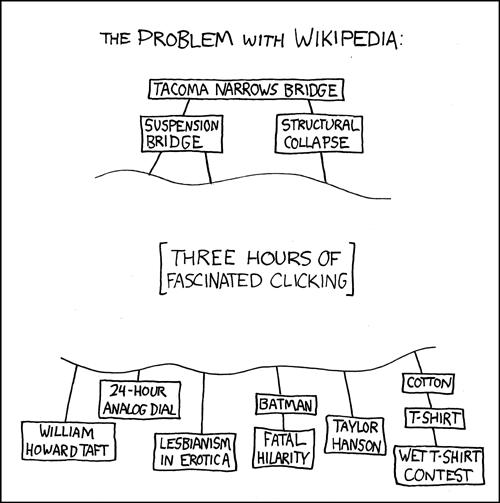
By far the most common response when I tried to explain to people what I was working on, and what a spreadsheet-wiki actually meant, was “Oh, you mean like Google Spreadsheets?” But Google, and their online spreadsheet rivals, aren’t really creating what I want. Google Spreadsheets is no more a spreadsheet wiki than Google Docs is a text wiki. Yes, they’re great for collaboration, but that’s only half the wiki story. The critical other ingredient on a wiki is the humble link. Even outside wiki-land the power of the hyperlink is still poorly understood and massively underrated. It’s the fundamental building block of the Web, but even still hasn’t lived up to anywhere near its potential. Almost everyone, when they talk or write about Wikipedia, focuses on the “Anyone Can Edit!” part (whether with awe or despair), but the vast majority of readers never edit anything—the key for them is that absolutely everything is a link:


My dream is that that could also be true for numbers.

Wikipedia, of course, is full of numbers. People can talk about them, change them, cross-reference them, and do all manner of wiki goodness with them. But that’s not enough. Those numbers currently live in splendid isolation. They can’t interact in a spreadsheety way.

There have been various attempts to fix this, generally involving embedding spreadsheets into wiki pages as a replacement for plain tables. But although that achieves the goal of being able to perform some basic calculations in-place, it’s no better than being able to embed an Excel sheet in a Word document. It doesn’t solve any of the well known problems with large spreadsheets (aka Spreadsheet Hell). In a spreadsheet-wiki the spreadsheet should not be a second class citizen, subservient to the wiki. Rather, the spreadsheet should itself contain wikiness. Forget simple single sheet spreadsheets; I’m talking here about hundreds or thousands of properly cross-linked sheets, all mutually feeding each other. Forget having to email around your monthly financial statements comparing actuals to budgets with everything gradually drifting out of sync as no-one is quite sure which is the master copy any more, and no ability to examine how you got to what you have. In a spreadsheet-wiki every number is a link. You can see where it came from, and where it’s being used. If an assumption changes, everything that depends on it automatically changes. No more wasting 3 weeks in a dead end because you were working from old numbers. No more wondering why that P&L entry for “Miscellaneous Expenses” was so high in March. No more wasted time collating projections and forecasts from department heads, harmonising them into a divisional budget for the upcoming year, only to have to redo the entire process 4 times when the CFO trims your budget, or the COO explains some of the impact of a new office opening in in September. Instead everyone can work on their own page, have the data pulled automatically into a series of other sheets, and have changes take effect universally and instantly whilst everyone hammers out the details — with, of course, full transparency of who changed what when (and hopefully why), and the ability to roll-back to any earlier stage.

Most of the technology to make this work already exists. There are some interesting issues when you start talking about thousands of inter-related sheets, but that can evolve when we see what the real usage patterns are. Making something come together that will show just how powerful a concept this is, is mostly just a matter of vision, SMOP, and tuits. Like any of my other ideas, I’d love to work on it, but I can’t build it on my own. If you’re interested in working with me on it, or just building it yourself and picking my brains from time to time, please get in touch.

Track Every Penny

June 1st, 2009 5 comments

Personal finance software universally sucks. I have two theories for why this is:

Firstly, there actually is no personal finance software. It’s all just dumbed down versions of corporate accounting software. No matter how it’s dressed up to be ‘user friendly’, at the heart of it all is the core underlying assumption that you want to run your personal life like an accountant runs a business. Many people have been sucked into this way of thinking, in large part because it’s the mindset that using such software foists upon you, but really it’s a poor model.

The second reason is that it’s almost all created by Americans. By itself, of course, that’s not necessarily a bad thing. But it becomes a bad thing when it reflects their view of the world, which, particularly in matters of personal finance, doesn’t really hold true in other countries. And I’m not just talking here about the assumptions that are generally built into how relatively complex things like mortgages, or sharedealing, or taxes, or retirement accounts, etc work in different countries. Mostly I’m talking about the really simple things like not assuming everything is in US dollars! Sure, there’s generally a token nod to other currencies, but most finance software cope can’t even cope with simple multi-currency transactions (like all the times in Switzerland when I got a bill in Swiss Francs but paid in Euros), never mind the more complicated ones (like the time I bought my bus ticket from Bulgaria to Macedonia using my last remaining levs and made up the difference in Euros). And because most people who write finance software have never lived somewhere like New Zealand where the smallest coin is the ten cent piece, they tend not to cope very well with things like Swedish Rounding, where your total is rounded if you’re paying by cash (but not if by card).

Of course it’s possible to do these things in most software, but only if, under theory #1, you can think like an accountant and do the equivalent of lots of complex ledger entries. But lots of things that are deliberately really complex in business accounting are commonplace in people’s personal lives – like asking your friend if they have eighty cents to avoid needing to break another €10 note.

Most people get round all this by just ignoring it. Who really wants to have to record that their shopping bill was €14.80 but eighty cents of that came from Steve anyway? Well, me. I’m a firm believer in the “track every penny” school of thought. And I hate how hard it is for me to do so. In the 5 months of this year so far, I’ve been in 9 different countries. I keep every receipt, and record every item from every one of them. And it’s much too much hassle. I’ve tried numerous different software packages, and they’re all terrible for me. There’s a lot of innovation in the area recently with sites like Mint and Wesabe springing up and giving the old faithfuls of Quicken and Microsoft Money a serious run for their money. But there’s increasingly an assumption that most of your spending detail can be automatically obtained from your bank records so you don’t need to type it in. It makes sense for them to concentrate there, as having to painstakingly enter all your spending is the thing that puts most people off ever actually keeping track of where their money is going. But the more that part gets automated away, the less these companies work on making it really easy to enter transactions manually — which leaves me worse off, as I do the vast majority of my spending using cash, and my bank records thus tell me next to nothing. Even on the rare occasion where I pay for my groceries on my debit card, I don’t just want a total spend entered—I want a full breakdown of every line item. I want to know at the end of the year just how much I spent on milk or eggs, not just on “groceries”.

So I want software that works for me. That assumes I’ll be travelling a lot and working with multiple currencies. That makes it easy for me to enter detailed records rather than a chore. That deals with all the little details I raised last time I ranted about this.

It may be that I’m the only person in the world that actually wants this software, but I suspect I’m not. In the current economic climate people are watching their pennies carefully. Almost every personal finance book suggest that people literally track every cent they spend for at least a month. I think lots of people would like to know much more about where their money goes, but the pain of keeping track currently outweighs the benefits for a lot of people. So I want to make that easy.

I have a detailed vision of how that software would work, but I can’t build it by myself. Anyone want to help?

Where can I fly to this month?

June 1st, 2009 1 comment

All my playing with end-of-year travel plans has given me itchy feet. I’d like to go somewhere interesting for a few days sometime soon, but I don’t really care so much where. This is something the internets are meant to help with, but though the US is well served with any number of useful quirky travel sites, Europe doesn’t have so many of the “Just show me good deals” versions if you don’t live in certain key cities. So, in the DIY spirit, I wrote my own. I gathered a list of all the commercial airports I could find in Europe, grouped them by country, and wrote a script that searched on ITA in turn for all flights from Tallinn to any airport in that country over the next 30 days, and tell me the cheapest date to travel there. It’s a slightly nasty site to screen-scrape (and I’m pretty sure they don’t have any alternatives that you don’t have to pay for, as some of the puzzles they set job applicants involve scraping the site), and the code certainly isn’t pretty, but, thanks to Google Charts, the results are:

(Green is the cheapest, red the most expensive, yellow somewhere inbetween.)

My plan is to widen this beyond Europe, have it run every day, set some threshholds and have it email me any time something interesting appears. I suspect, however, that I’m much better served from Riga:

Thankfully there’s a comfortable bus to there!